
Planning a Trip to Paris for the First Time (What Actually Helps)
Planning a trip to Paris is thrilling and more than a little intimidating. I went back in late 2025 for the first time in over 30 years, and even with a prior visit under my belt, there is just sooo much to take in.

Do you need to learn French? (No, but bonjour is essential.) Will you look ridiculous ordering a cappuccino after breakfast? (Yes, but only to the waiter.) Between museums, Metro maps, and croissants the size of your head, it is easy to feel overwhelmed before you even pack a bag.
So this is the practical half of Paris. How far ahead to book, when to go, where to base yourself, how to get around, what the whole trip actually cost me, and the handful of etiquette rules that will keep you from getting the side-eye. The sightseeing half lives in a separate post, and I will point you there when we get to it.
If you’re still in the couch-research phase, start with my list of movies to watch before you visit Paris.

How Far Ahead to Start Planning
You can book Paris eighteen months out and spend the next year and a half worrying about it, or you can show up and sort it out at the hotel desk. Neither is necessary. Here is roughly how my trip came together, plus the one thing I would do differently.
- Six months out. Pick your dates, then go look at what else is happening in Paris while you are there. Fashion weeks, big museum exhibits, and marathons all move hotel prices and crowd levels, and you want to know that before you book rather than after. Check your passport in the same sitting, because the validity rules are stricter than most people assume. I start poking around on Google Flights to get a feel for when prices go up and down, which helps me zero in on when to buy. I tend to get my ticket a couple of months in advance.
- Three to four months out. Hotels. This is the map exercise from further down this post: pin your must-sees, look at where they cluster, then search around that spot. Give yourself a real evening for it. I booked my hotel 4 months out!
- One to two months out. Book timed-entry tickets or restaurant reservations for anything you would be genuinely sad to miss. Often tickets are not available for purchase more than a couple of months prior. I loved having a timed-entry ticket for at least one thing a day to structure my time around, and to make sure I got to see the things I wanted with as little hassle as possible.
- Two weeks out. Download your apps, and in Google Translate, save French for offline use so it still works when your data does not. Start walking every day if you have not already, because the cobblestones do not negotiate.
Everything else can wait. Paris has been there a while and will still be there when you land.
When to Go

Paris is worth visiting year-round, but the vibe changes with the season.
- Spring (March to May). Cherry blossoms in front of Notre Dame and picnics in the Luxembourg Gardens. Gorgeous, and crowded once the weather warms up.
- Summer (June to August). Long sunny evenings along the Seine and café terraces buzzing late into the night. Prices and tourists both climb. Parisians leave town in August, so some shops and restaurants close.
- Fall (September to November). My pick, and my last trip confirmed it. Crisp weather, thinner crowds than summer, autumn color in the parks, plenty of festivals. September was lovely. Stay tuned for my November 2026 trip review.
- Winter (December to February). Cozy cafés, holiday lights, and museum days without elbowing anyone. Cold, yes. Shorter lines and better hotel rates.
If your dates are flexible, check for special exhibits, fashion weeks, or major events you would love to catch (or avoid like the plague).
How Many Days You Need
Five is the number I would give a first-timer. Three works if you are disciplined about it and willing to skip things. Seven is lovely and gives you a day trip or two.
Whatever number you land on, resist the urge to fill every hour. Pick one or two big sights a day and leave room for café breaks and getting delightfully lost. That is when the best Paris moments happen, and it is also how you avoid the thing where you see everything and remember nothing.
Getting to Paris
Before you get to the Metro, there is the small matter of crossing the Atlantic. When I priced my flights, French Bee out of SFO to Orly beat the LAX and San Jose options every time I checked. It is a discount French carrier, so know what you are buying, but it is worth a look if you are anywhere near the Bay Area and watching your budget. I flew their Premium cabin, which ended up being my single biggest expense of the trip. The full breakdown is further down.
- From Charles de Gaulle (CDG). Take the RER B train straight into the city. If you would rather not wrestle luggage on a train, official taxis run flat rates of roughly €55 to €62 depending on your destination.
- From Orly. Metro Line 14 was extended to the airport and replaced the old OrlyBus. It runs into central Paris in about 25 minutes, smooth and no-fuss. Official taxis from Orly are flat rate, about €36 to €45 depending on which side of the Seine you are headed.
At both airports, skip the unlicensed cabs. The person who approaches you inside the terminal offering a ride is not the deal they are presenting themselves as.
What to See
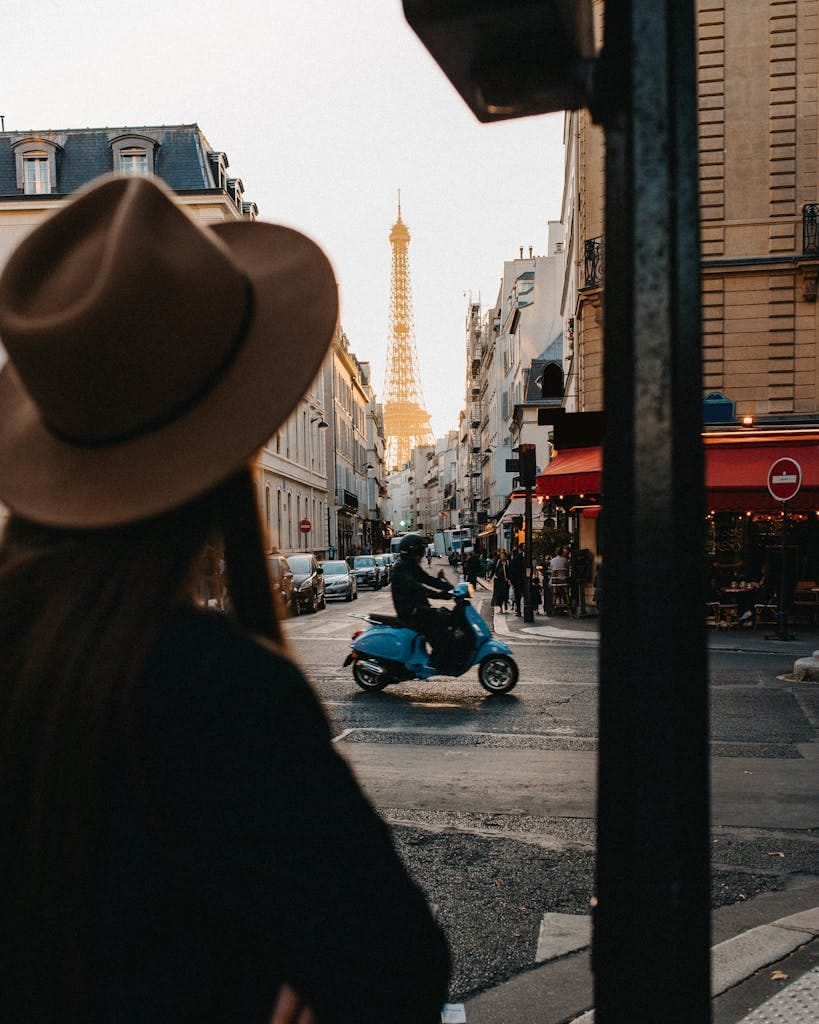
Here is the thing about the Louvre: nobody has ever seen all of it. Not even the staff. Not even Tom Hanks, who seems like a nice guy. Do not try. Pick the wing you care about, see it well, and leave the rest for a future life.
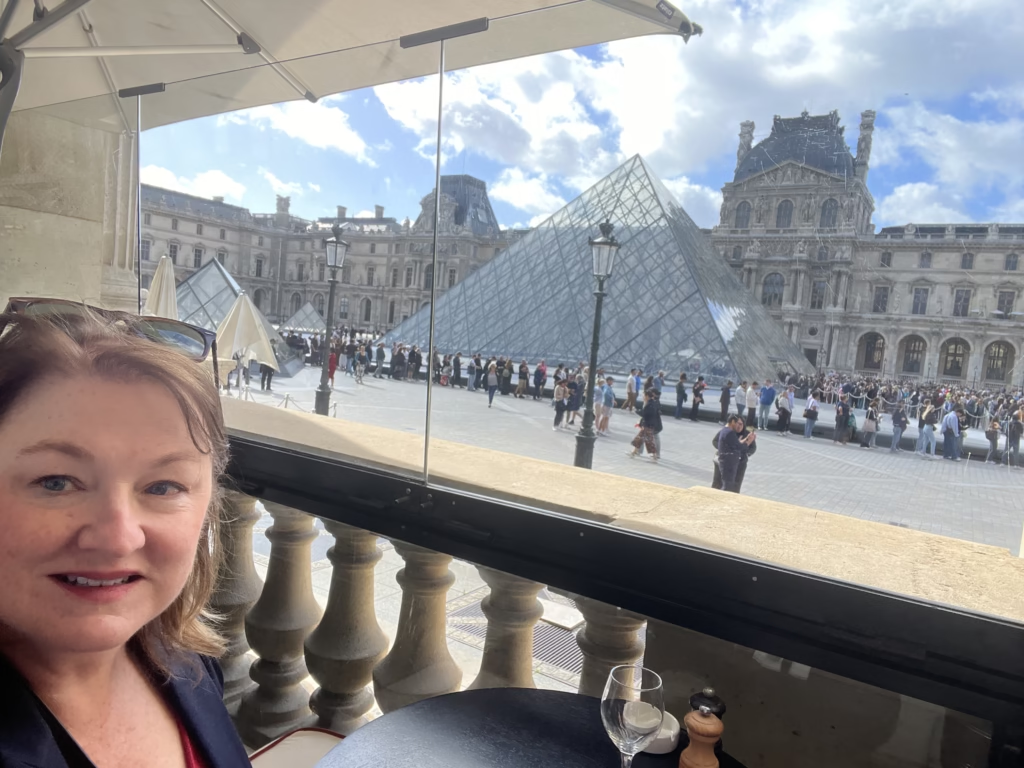
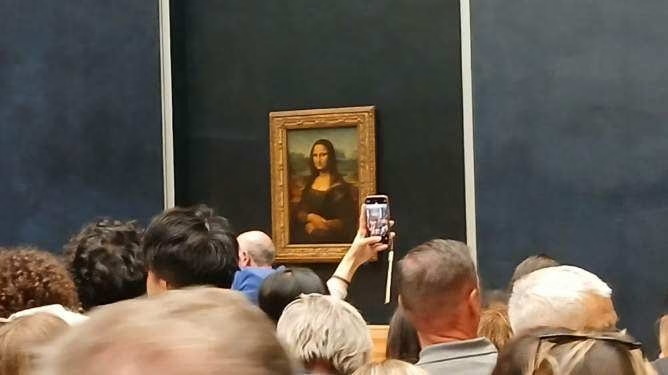
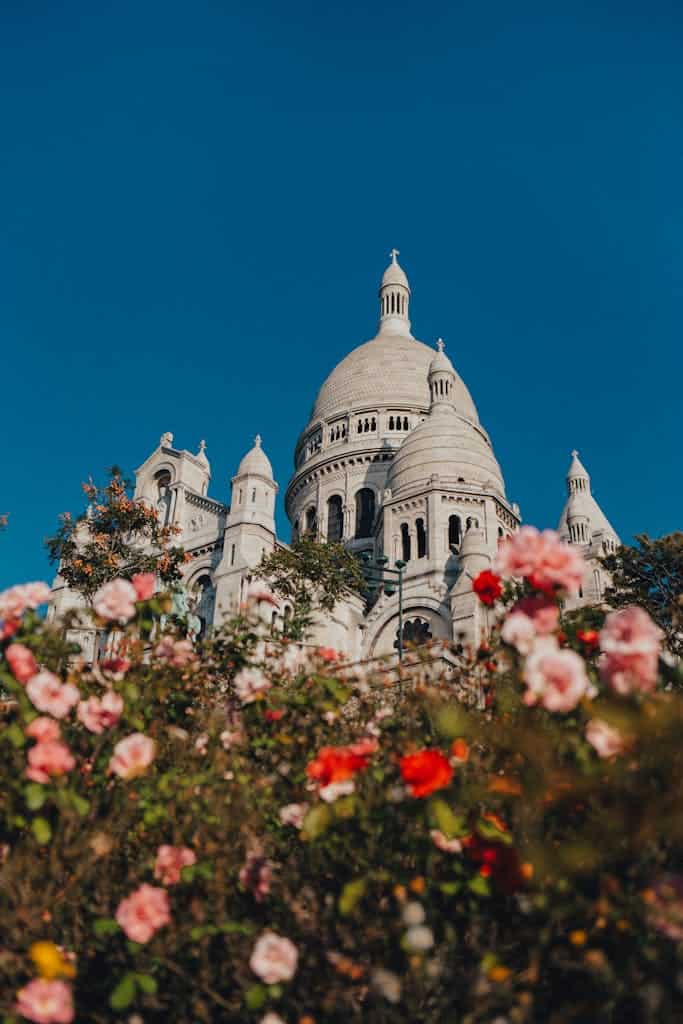
For a first trip I would build a list around the Louvre, the Musée d’Orsay, Sainte-Chapelle, the Opéra Garnier, Sacré-Cœur and Montmartre, and the Eiffel Tower. I have opinions about every one of them, including which ones to skip going inside, and I put all of it in order, day by day, with photos and what to know before you go.
My 5-Day Paris Itinerary for Women Over 50
Note the sights that pull at you, then read up on each to see if it is worth your time and money. Good travel blogs are my favorite resource for this, real information from a real person’s point of view. YouTube is great for getting a feel of a place before you commit.
Where to Stay
Once your must-sees are sorted, lodging gets easier. I plot the places I am going on a map so I can see whether they cluster, then start my hotel search around there. You can use Google’s “My Maps” to build your own planning map.
Here is the map I built to plan my trip. After pinning my must-sees, it was clear that staying near a central Metro stop, somewhere around the Palais Garnier or Place de la Concorde, made the most sense. (To see the pinned names, click the box in the map’s upper left corner, then click a name for more info and the website.)
Unless the Hilton is really your bag, do not book big chain hotels in Paris. I think it adds so much to stay in a small independent place, walkable to a Metro line, with a little character. That is my only real non-negotiable. After far too many hours comparing reviews (and a croissant or two for fortitude), I booked Hôtel des Comédies in the 10th arrondissement, and it was exactly what I wanted.

It is an independent 3-star boutique, about $250 a night when I stayed in September 2025. It is a two-minute walk to the Bonne Nouvelle Metro, surrounded by local cafés instead of souvenir stalls. The building is historic and shows a little wear. The carpets are not winning awards. But the rooms are updated, there is air conditioning and an elevator (not a given in Paris), and the front desk was friendly and kind every single time I walked past. The neighborhood feels like Parisians actually live there. Stylish trench coats, dogs of every size, friends kissing on both cheeks. It felt like a movie set and I would stay again without hesitating.
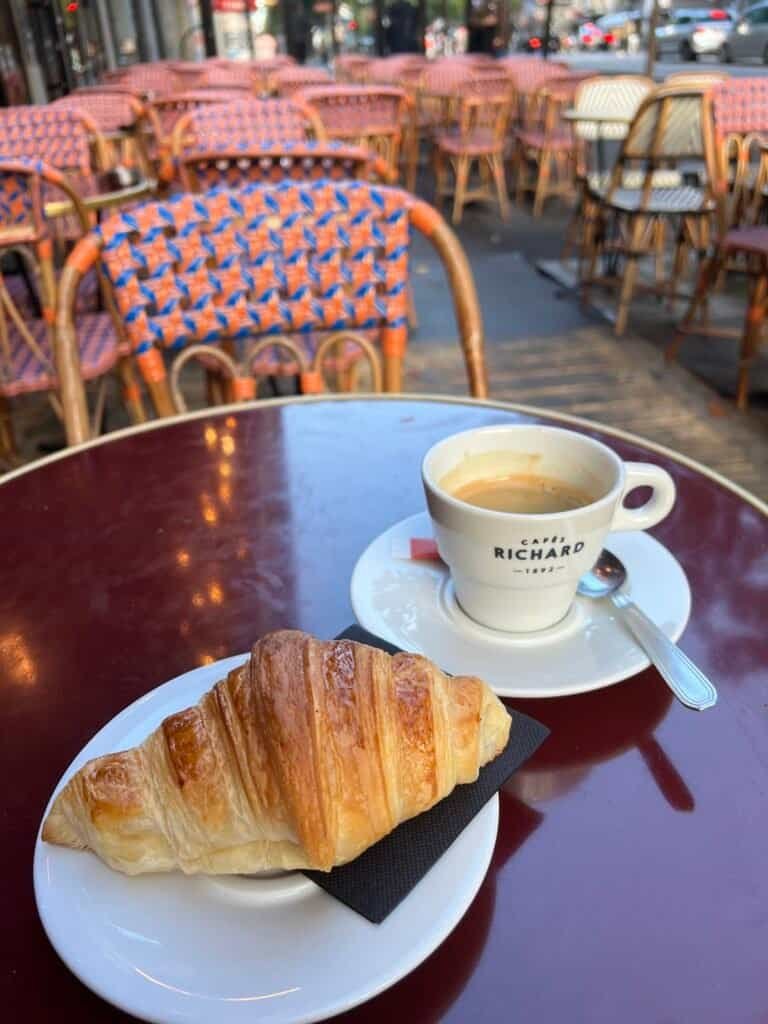
My full Hôtel des Comédies review, with a video tour
If you want to run your own search, Booking.com is a fine starting point. Enter where and when, then filter for neighborhood and price. Just check the walking distance to the nearest Metro before you fall in love with a listing. Staying near a station is the one thing I would not compromise on.
A Note on Arrondissements
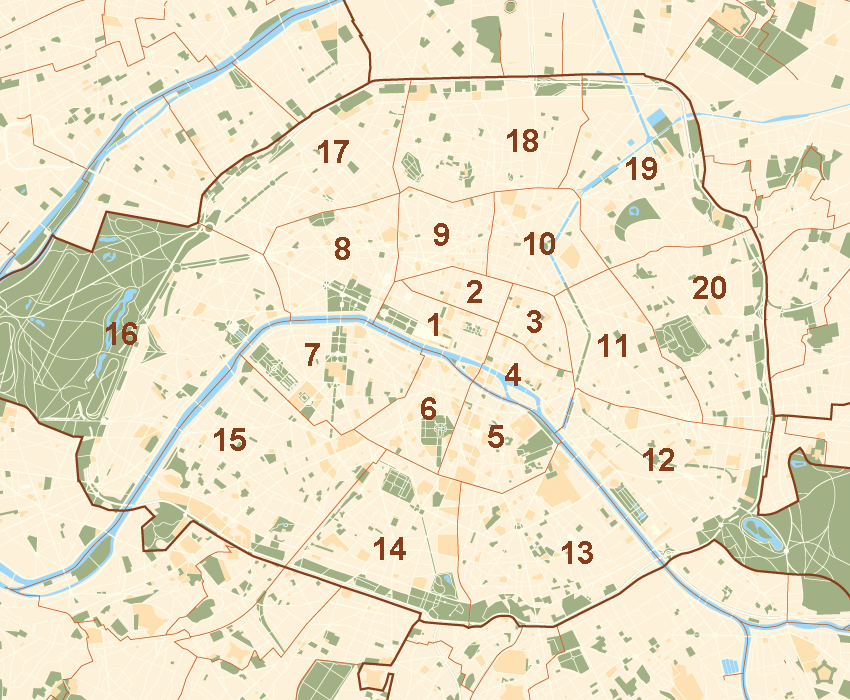
An arrondissement is a district. Paris has 20 of them, numbered in a spiral that starts at the Louvre and winds outward clockwise, like a cinnamon roll. The French consider this logical. It is also why the 1st and the 20th are nowhere near each other while the 5th and the 6th are neighbors, which stops being confusing the moment you give up on the numbers meaning anything.
You do not need to learn all twenty. You need about six.
- 1st and 4th. The Louvre, Notre Dame, and everyone else visiting Paris this week.
- 5th and 6th. The Latin Quarter and Saint-Germain. Beautiful, and priced accordingly.
- 7th. Has the Eiffel Tower. Goes to bed early.
- 8th. The Champs-Élysées, where a good part of what you pay for is the address.
- 9th. Around the Opéra. Central without being a postcard.
- 10th. Where I stayed, and where people actually live.
After that, higher numbers generally mean farther out, cheaper, and more time on the Metro. That is the entire system.
Getting Around Paris

Once you land, Paris is easier than it looks, as soon as you make peace with the Metro map spaghetti.
- Metro and buses. Paris has finally caught up: you can pay for rides with your phone (Android 8 and up, or iPhone XS and newer). Download Île-de-France Mobilités or Bonjour RATP, load a ticket, and tap at the gate like a local. I still recommend grabbing a cheap Navigo Easy card at a station machine as backup. Apps glitch, and the last place you want tech trouble is while juggling a croissant and trying to catch a train.
- Walking. Paris was made for it. Bring shoes that can handle cobblestones. Your feet will thank you even if your fashion sense sulks a little. The best discoveries usually happen when you wander off the planned route.
- Taxis and rideshares. Uber works in Paris and is not always cheaper or faster than the Metro. Save it for late at night when trains thin out.
- Day trips. Trains from Gare du Nord and Gare de Lyon make Versailles, Giverny, and Reims (hello, Champagne) easy.
Money

- Cash. Skip the airport exchange counters, they are a rip-off. Use an ATM once you arrive for euros at the best rate. Most places take cards, but carry a little cash for markets, small cafés, and that one boulangerie with the world’s best croissant and a handwritten “cash only” sign.
- Credit cards. Visa and Mastercard are widely accepted. Make sure yours has chip-and-PIN or contactless. American Express is hit-or-miss outside big hotels and restaurants. If you have a travel rewards card with no foreign transaction fees, bring it. Mine is the Chase Sapphire and it earned its keep.
- Tipping. Relax, this is the easy part. You do not tip the way you do in the U.S. Service is already included in restaurant bills (service compris). If you had a great meal, leaving a little change or rounding up a euro or two is appreciated and not expected. For taxis, round up. For airport transfers or private guides, €5 to €10 is a nice gesture when the service was especially good.
What It Actually Cost
Here is the breakdown for my late September 2025 trip, six nights and five full days.
- Flights – $2000 (San Francisco to Paris round trip, French Bee Premium)
- Hotel – $1500 (Hôtel des Comédies, double room)
- Food – $450
- Tours and entry fees – $300. The Louvre, Musée d’Orsay, Orangerie, Sainte-Chapelle, Opéra Garnier, and La Galerie Dior came to around $200. I also did a Fashion History Walking Tour for $100.
- Transportation within Paris – $150 (about half Metro, half Uber and taxis)
Total: $4400
Saying Bonjour, and the Other Rules Nobody Tells You
Paris is wonderful and it has its quirks. A few things that will make a first visit smoother.
- Say bonjour. Unlike in the U.S., you are expected to greet people when you walk into a shop or a restaurant. Skip it and you will get side-eye that could cut through a baguette. A simple bonjour, merci, and s’il vous plaît go a long way. Even if your French ends there, the effort registers.
- Linger. In many cafés you seat yourself, and if you order just a coffee, nobody will rush you. Parisians are professionals at this. Pay at the counter if the waiter does not bring the bill.
- Do not expect a refill. Order another if you want one.
- Sunday closures. Some shops shut down. Museums, big attractions, and many restaurants stay open. Plan ahead if you want to browse boutiques.
- Monday and Tuesday closures. Check the days museums are open. Many close one or the other, and finding out at the door is a special kind of heartbreak.
- Bathrooms. Not every café will let you use theirs unless you buy something. Keep coins for public restrooms, or perfect the art of the “I swear I am buying something after this” face. And say bonjour first.
- Dining alone. You will not feel out of place. Paris cafés are built for people-watching. Bring a book or a journal and voilà, you are not alone, you are an author working on your manuscript.
Staying Safe
The biggest safety issue in Paris is not violent crime, it is sneaky hands on the Metro and around the big sights. Keep your bag zipped and in front of you, do not carry all your cash in one place, and do not leave your phone on the table while you eat. I used a cross-body bag and felt perfectly at ease, including at night.
That is the Paris-specific version. The general playbook I use everywhere is in my solo female travel safety tips.
Emergency and Medical

Hopefully this section stays firmly in the “good to know, never need” category, like how to change a tire or assemble Ikea furniture.
- Emergency number in France. Dial 112 for medical, fire, or police.
- Hospitals vs clinics. Head to a hospital for serious issues like chest pain or broken bones. For smaller problems like fevers or infections, look for an urgent care clinic (centre médical).
- Language help. Many doctors speak English. Keep Google Translate on your phone anyway. It works offline and translates photos of signs and prescriptions.
- Insurance. Check your health plan before you go. Some credit cards include international medical and travel coverage with a 24-hour emergency line, so read the fine print. Mine does. If yours does not, buy short-term travel medical insurance. I use SafetyWing.
- Embassy resources. The U.S. Embassy in Paris has English-speaking doctors, notaries, and help with passports and legal issues. Bookmark the site before you travel.
Keep a small “just in case” card in your wallet with emergency contacts, insurance info, and your hotel address written in French. You will probably never use it. If you need it, you will be glad it is there.
Hopefully the most medical decision you face in Paris is choosing between the chocolate éclair and the almond croissant.
The Boring Paperwork
If you are from the US, UK, Canada, or Australia, you can enter France for up to 90 days with a passport issued within the last 10 years and valid for at least three months past the day you plan to leave the Schengen Area, which is 29 European countries and not the same list as the EU. No visa required.
Two things are in motion, so check before you book:
- Biometrics at the border. Since October 2025, your first entry into the Schengen Area includes a photo and fingerprints at passport control. It adds time. Do not book a tight connection on the day you land.
- ETIAS. An online travel authorization you apply for before you fly. It is not in effect yet and is expected in late 2026. The EU has said it will announce the exact start date at least six months ahead, so there is time.
Rules change. Check the ones that apply to you:
- Australian Citizens
- Canadian Citizens
- UK Citizens
- US Citizens
- For other countries check your visa requirements here
Train Your Legs Before You Go
Paris is a walking city, and cobblestones, Metro stairs, and 20,000-step days add up fast. I wish I had done more walking at home before this trip. I spent my first two evenings taking Advil and soaking in the bathtub.
Start a daily walk in the weeks before you go and thank yourself later.
Paris Essentials, a Quick Checklist
Apps to Download
- Google Translate (download French for offline use)
- Citymapper or Bonjour RATP for the Metro and buses
- SNCF Connect for trains and day trips
- Rome2Rio for figuring out the best way between any two places
Getting Around
- Navigo Easy card, or load tickets onto your phone (Android 8 and up, iPhone XS and newer)
- Book a hotel near a Metro station, every time
- Comfortable walking shoes beat cute but painful ones. Parisian cobblestones do not care about your Instagram.
Money
- Use ATMs for euros, avoid exchange counters
- Visa and Mastercard are widely accepted. Check your card for foreign transaction fees.
- Tipping: service is included. Rounding up is a nice extra.
Emergency Info
- Dial 112 for medical, fire, or police
- U.S. Embassy in Paris: fr.usembassy.gov
- Keep insurance and hotel info in your wallet and on your phone
Etiquette
- Say bonjour walking into shops and cafés
- No coffee refills, order another
- Linger. It is encouraged.
Where to Go From Here
Paris does not have to be complicated. Sort out your must-sees, pick a Metro card (or let your phone do the tapping), and practice your best café linger. The rest will happen on its own.
The best Paris moments are usually not on the itinerary anyway. They are the ones you stumble into, like a jazz trio on the Seine or the perfect chocolate éclair you found while looking for the bathroom. Pack your curiosity and maybe some stretchy pants, and let Paris do the rest.
Three posts to read next, in the order I would read them:
- My 5-Day Paris Itinerary for Women Over 50, every sight above in order, day by day.
- My Hôtel des Comédies Review, the boutique hotel I would book again, with a video tour.
- 10 Travel Lessons I Just Learned in Europe, worth a read while you are still in the planning stage.
